2026.02.01 (일) 05:25




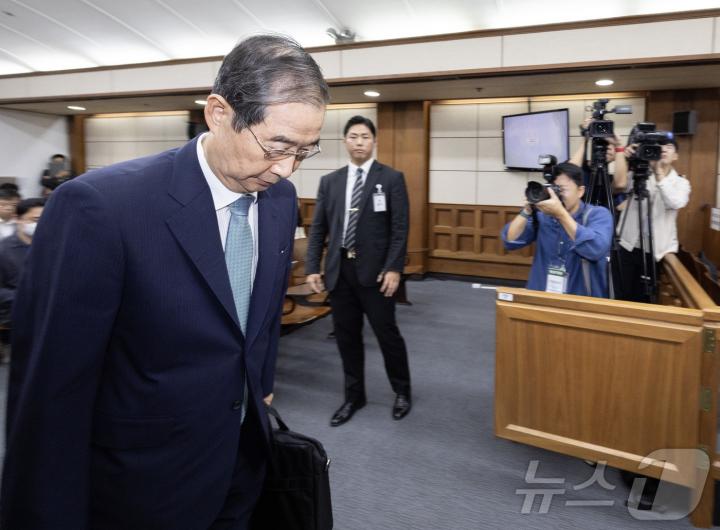
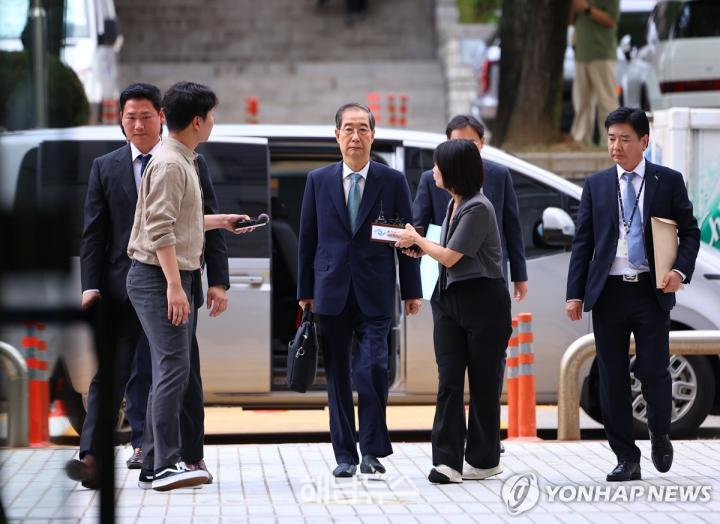 한덕수 전 국무총리 법원 등원 / 사진제공=YONHAPNEWS |
【사설】
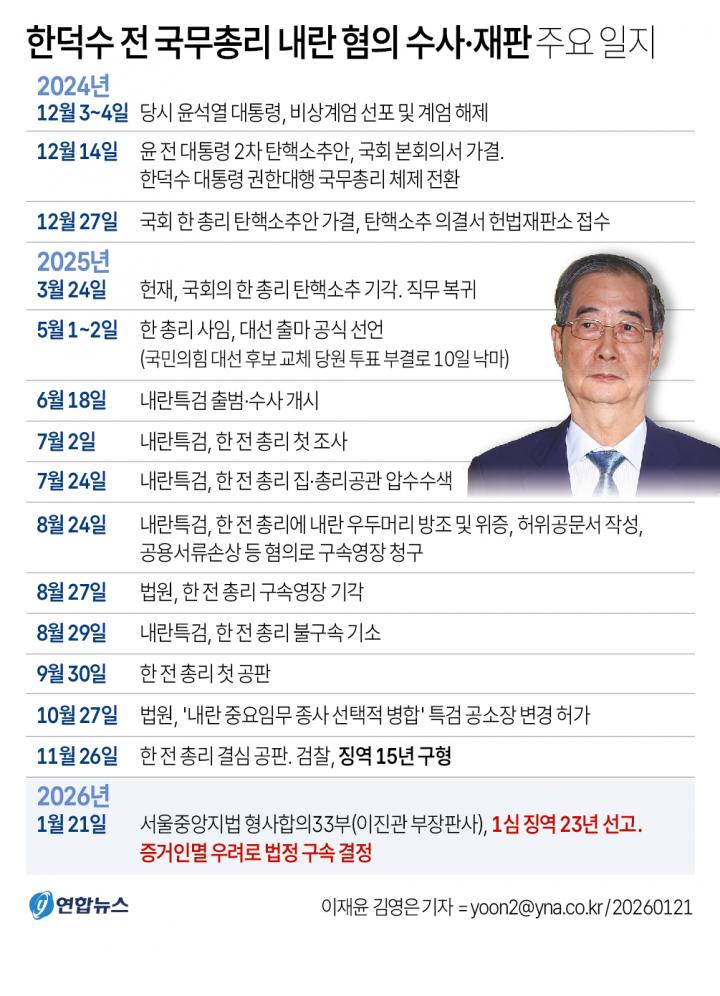
전 한덕수 국무총리에게 선고된 내란종사 혐의 징역 23년은, 한 개인의 형량을 넘어 국가 권력의 책임선을 다시 그은 판결이다.
이진관 부장판사는 판결문에서 일관되게 묻는다.
국무총리는 무엇을 알고 있었는가, 그리고 무엇을 막을 수 있었는가.
판결의 결론은 단호하다.
“몰랐다고 보기 어렵고, 막을 수 있었으며, 그럼에도 그러지 않았다.”
판결문은 먼저 국무총리의 헌법적 지위를 짚는다.
국무총리는 대통령의 지시를 단순 집행하는 보조자가 아니라, 국무회의를 통해 국정을 통할하는 헌법기관이다.
판결은 국무회의의 성격을 분명히 한다.
국무회의는 형식적 절차가 아니라, 대통령의 중대 국정 결정을 헌법적으로 심의·제어하는 장치다.
따라서 판결문은 이렇게 판단한다는 취지다.
국무총리가 계엄 검토와 군·경 동원 정황을 인식했음에도 이를 제어하거나 반대하지 않았다면, 그 침묵은 중립이 아니라 기능적 동조에 해당한다.
판결문은 이어 내란종사 성립 요건을 구체적으로 적용한다.
직접 폭력을 행사하지 않았다는 사정은 형사 책임을 면하게 하지 않는다.
내란의 실행을 가능하게 하거나, 국가 최고 의사결정 구조에서 이를 방치·용인했다면 형법 제88조가 예정한 종사 책임은 성립한다는 것이다.
 한덕수 전 국무총리 내란혐의 재판 / 사진제공=해남뉴스 |
특히 판결은 다음 점을 중시한 것으로 정리된다.
12·3 당시 전시·사변에 준하는 국가비상사태는 존재하지 않았고 국회는 정상 작동 중이었으며 치안 유지에 병력 투입이 불가피하다고 볼 근거가 없었다는 점, 그럼에도 군과 경찰이 동원됐고, 헌법기관인 국회와 선거관리위원회의 기능이 위협받았다는 사실은 우발적 상황 대응이 아니라 사전에 예정된 국가권력의 행사라는 판단이다.
이진관 부장판사의 판결은 내란을 결과가 아닌 과정과 구조의 범죄로 본다.
판결문 요지는 명확하다.
내란은 성공했는지 실패했는지가 아니라, 헌법 질서를 무력화하려는 목적 아래 국가기관이 조직적으로 움직이기 시작했는지가 핵심이라는 것이다.
따라서 발포가 없었다는 주장, 유혈 사태가 발생하지 않았다는 사정은
범죄 성립을 좌우하지 않는다.
이 판단은 대법원 판례가 확립한 기준을 현실 사건에 정밀하게 적용한 결과다.
징역 23년이라는 형량은 보복도, 정치적 상징도 아니다.
판결문은 형량 이유에서 국무총리라는 지위가 갖는 책임의 무게를 강조한다.
국가 권력이 헌법을 벗어날 때, 가장 먼저 이를 제어해야 할 위치에 있었던 인물이 그 책임을 방기했다는 점이 중형 선고의 결정적 이유라는 취지다.
이 판결은 오래된 국가적 관행 하나를 정면으로 부정한다.
“위에서 결정했으니 따랐을 뿐”이라는 논리, “직접 손에 피를 묻히지 않았다”는 변명은 헌정 질서 파괴 앞에서 더 이상 통하지 않는다는 선언이다.
이진관 부장판사의 판결은 묻는다.
권력의 정점에 가까울수록 책임은 가벼워지는가,
아니면 더 무거워지는가.
사법부의 답은 분명했다.
더 무겁다.
이 판결이 갖는 의미는 여기에 있다.
계엄은 정치적 선택이 아니며, 국무총리는 방패가 아니고, 헌법은 권력의 언어로 해석되지 않는다는 점을 사법부가 문장으로 확인했다는 데 있다.
이 판결이 예외로 남을지, 아니면 대한민국 헌정 질서의 기준이 될지는 이제 사법부 전체의 선택에 달려 있다.
그러나 최소한 이 판결 하나만큼은 분명하다.
국가가 다시 한 번, 헌법의 이름으로 스스로를 제어할 수 있음을 보여준 기록으로 남을 것이다.
 한덕수 전 국무총리 / 사진제공=해남뉴스 |
박충배 해남뉴스 편집/논설
[Haenam = Haenam News] haenamnews@kakao.com
[Editorial]
**“The Prime Minister Could Not Have Not Known”
— Judge Lee Jin-kwan Defines the Boundary of State Responsibility**
The sentence of 23 years’ imprisonment for former Prime Minister Han Duck-soo on charges of participation in insurrection goes beyond the punishment of an individual. It redraws the line of responsibility for state power itself.
In his judgment, Presiding Judge Lee Jin-kwan repeatedly poses a fundamental question:
What did the Prime Minister know, and what could he have stopped?
The court’s conclusion is unequivocal.
“It is difficult to conclude that he did not know; he was in a position to prevent it; and yet he did not.”
The judgment first examines the constitutional status of the Prime Minister.
The Prime Minister is not a mere executor of presidential instructions. He is a constitutional organ who governs the administration of state through the Cabinet, not a subordinate aide.
The ruling clearly defines the nature of the Cabinet.
The Cabinet is not a formal or ceremonial procedure; it is a constitutional mechanism designed to deliberate on and restrain major presidential decisions.
Accordingly, the court reasoned as follows:
If the Prime Minister was aware of deliberations on martial law and the mobilization of military and police forces, yet failed to restrain or oppose them, such silence does not constitute neutrality. It amounts to functional complicity.
The judgment then applies, in concrete terms, the legal requirements for participation in insurrection.
The fact that the defendant did not personally exercise violence does not exempt him from criminal liability.
If a person enabled the execution of an insurrection or knowingly allowed it to proceed within the highest decision-making structure of the state, liability under Article 88 of the Criminal Act is established.
The court placed particular emphasis on the following facts:
At the time of December 3, there existed no wartime situation, no emergency equivalent to armed conflict.
The National Assembly was functioning normally, and there was no justification for concluding that military deployment was unavoidable for public security.
Nevertheless, military and police forces were mobilized, and the functions of constitutional institutions—namely the National Assembly and the National Election Commission—were threatened.
This was not a spontaneous response to an emergency, but the execution of state power that had been prearranged.
Judge Lee Jin-kwan’s ruling views insurrection not as a crime of outcome, but as a crime of process and structure.
The core holding is clear:
The decisive issue is not whether the attempt succeeded or failed, but whether state institutions began to move in an organized manner with the objective of neutralizing the constitutional order.
Accordingly, claims that no shots were fired or that no bloodshed occurred are irrelevant to the determination of criminal liability.
This reasoning reflects a precise application of standards long established in Supreme Court precedent to the facts of the present case.
The sentence of 23 years’ imprisonment is neither vengeance nor political symbolism.
In its sentencing rationale, the court emphasized the exceptional weight of responsibility inherent in the office of Prime Minister.
That an individual positioned to be the first to restrain the state when it departs from the Constitution instead failed to do so was the decisive factor justifying a severe sentence.
This ruling directly repudiates a long-standing and dangerous convention of state power.
The claim, “I merely followed orders,” and the defense, “I did not personally spill blood,” can no longer function as shields in the face of constitutional destruction.
Judge Lee’s decision ultimately poses a question:
As one moves closer to the apex of power, does responsibility diminish—or does it grow heavier?
The answer given by the judiciary is unambiguous.
Heavier.
That is the true significance of this judgment.
It confirms in written law that martial law is not a political option, that the Prime Minister is not a shield, and that the Constitution cannot be interpreted through the language of power.
Whether this ruling remains an exception or becomes a defining standard of South Korea’s constitutional order now depends on the judiciary as a whole.
But at the very least, this one judgment is clear.
It will remain on record as evidence that the state, once again, proved capable of restraining itself in the name of the Constitution.
 해남뉴스 박충배 편집 및 논설위원 haenamnews@kakao.com